Living in Palm Jumeirah
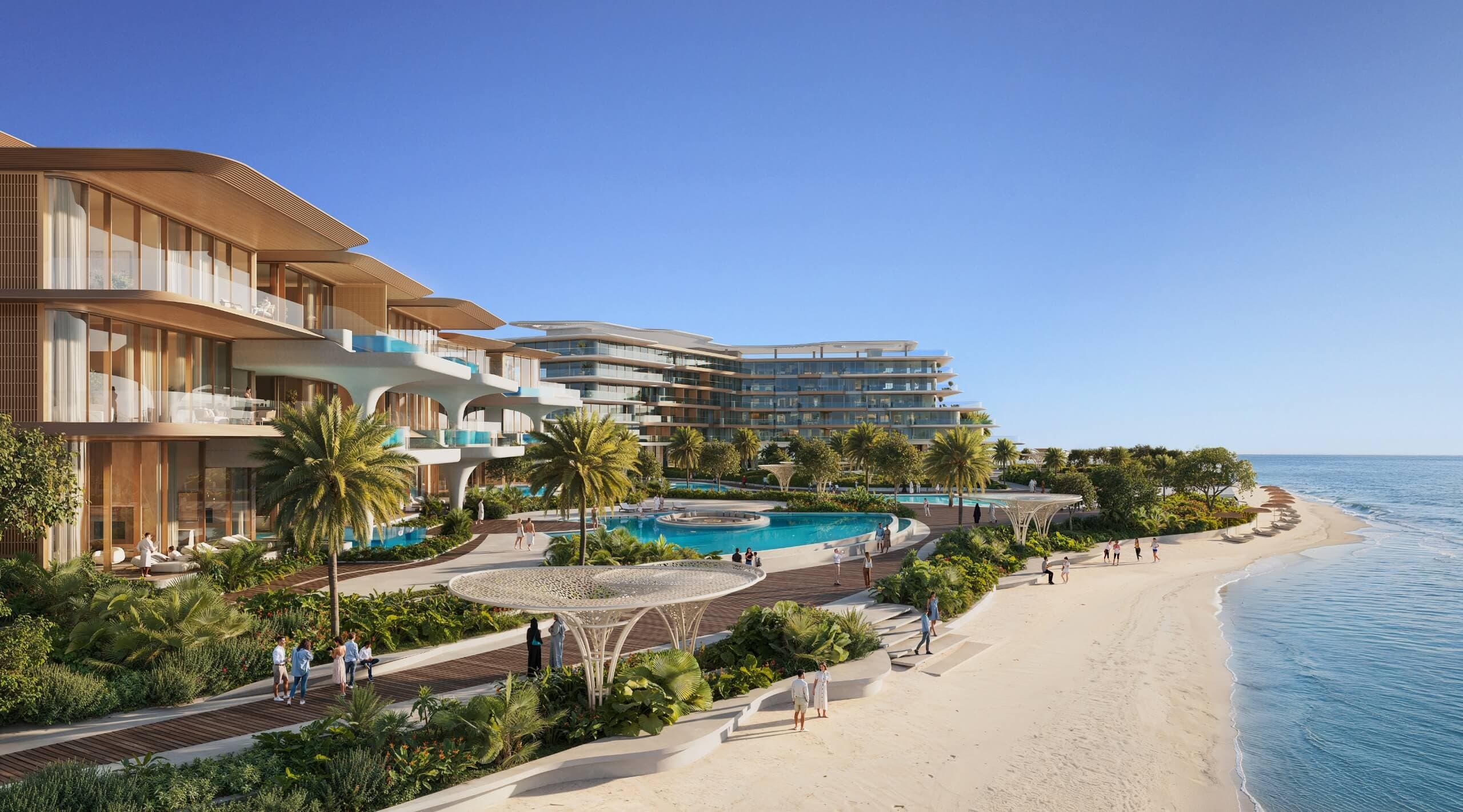
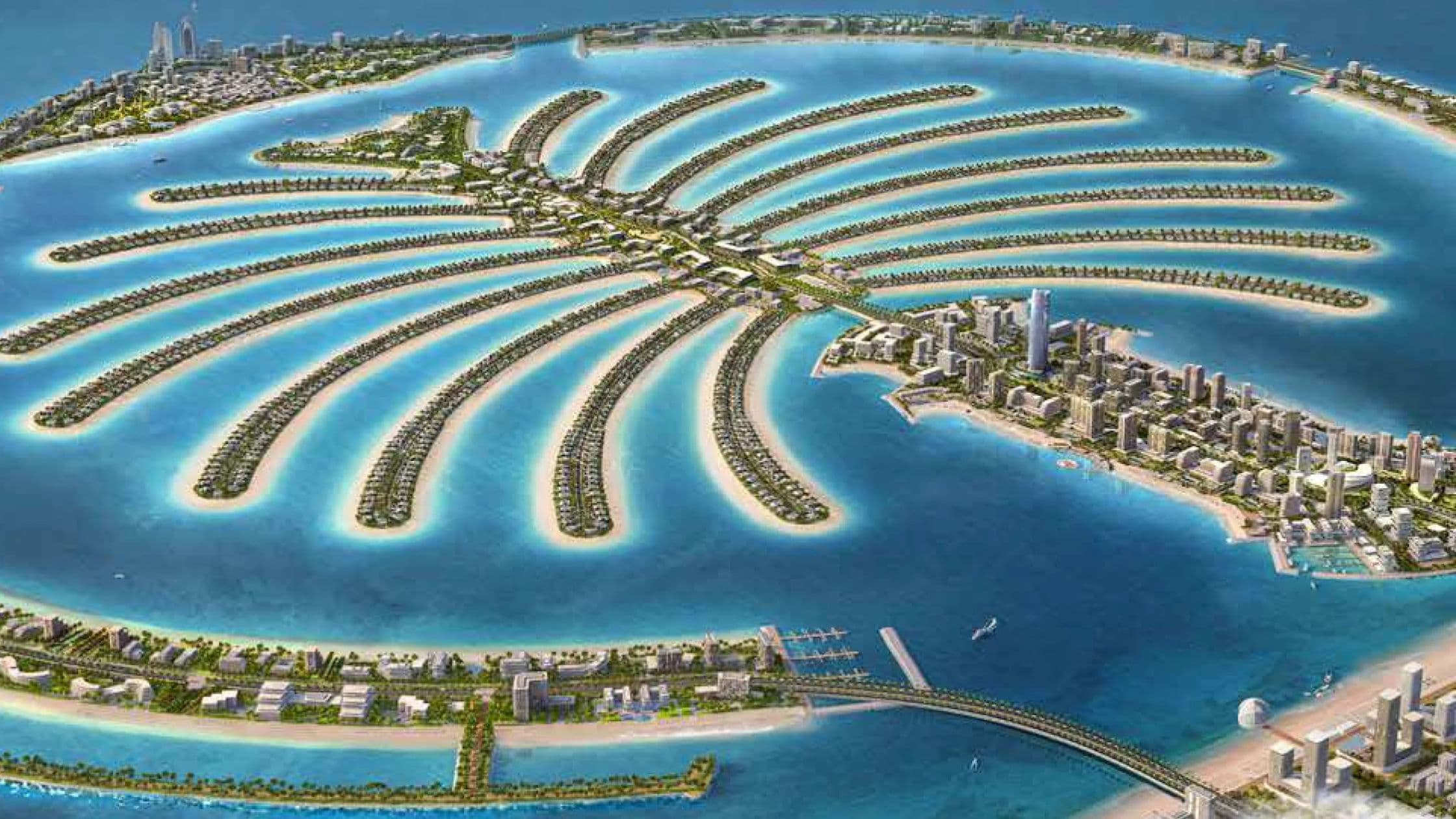
Palm Jumeirah is the iconic palm-tree-shaped artificial island off Dubai's coast, completed in 2007 and home to a mix of beachfront villas on the fronds, mid-rise apartment buildings and branded residences along the trunk and crescent, and major resort hotels (Atlantis The Palm, Atlantis The Royal, Waldorf Astoria, Anantara, Five). It is the city's definitive prestige address.
The vibe
The Palm operates at two speeds: the resort-and-beach club energy of the crescent, and the quieter villa-fronds where private beach access and low-density living dominate. It is less walkable than the Marina but better-served than most beach-villa areas. Resident profile skews to high-net-worth buyers, investors using units as second homes, and long-term lessees of the larger branded apartments.
Where it sits in Dubai
Palm Jumeirah extends roughly 5 km out into the Arabian Gulf, connected to the mainland by a road bridge from Al Sufouh and a pedestrian-friendly tunnel to the crescent. Dubai Marina is 5 minutes by car, Internet City 8 minutes, Downtown around 25 minutes.
Getting around
The Palm Monorail runs the length of the trunk from Gateway Station (mainland end) to Atlantis Aquaventure on the crescent, with intermediate stops at Al Ittihad Park, Nakheel Mall and Atlantis. It does not yet integrate with the Dubai Metro Red Line via a dedicated link — most residents access the metro via the Tram + Sobha Realty / DMCC stations on the Marina side.
Lifestyle, schools and amenities
Nakheel Mall and The Pointe sit on the trunk and crescent respectively, with major resort beach clubs (Cove Beach, Drift Beach, Soul Beach Club, WHITE Beach) along the perimeter. International schools are limited on the island itself — most families commute to Dubai British School, GEMS Wellington, or the Sufouh corridor. Healthcare is provided by Mediclinic Palm Jumeirah and several boutique clinics.